The OLED Newsletter, August 2017
Published: Tue, 09/05/17


Thoughts regarding the phosphorescent emitter market in 2018
The phosphorescent OLED emitter market is currently dominated by Universal Display who owns the basic patents to phosphorescent OLED emitters. All the major OLED makers (including Samsung and LGD) are using UDC's materials in order to achieve higher display efficiencies, beyond what is available from fluorescent emitters.
Universal Display holds over 4,000 issued and pending patents, but some of its basic phosphorescent patents are set to expire by the end of 2017. How will that patent expiration effect the market? Read our full article here, which discusses alternative phosphorescent emitters and whether UDC's design patents will be enough to fend off competition.







Truly sees large demand for PMOLED displays, to more than double its capacity
OLED maker Truly Semiconductor, based in Hong Kong, sees a large increase in PMOLED demand in the near future, and the company is executing an ambitious PMOLED capacity expansion plan.
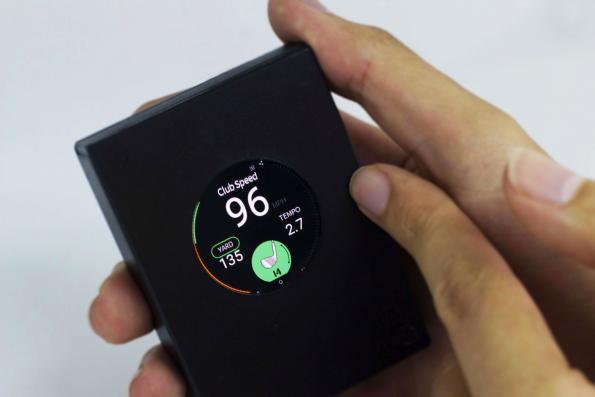
Truly is currently operating two production lines, with a total monthly capacity of around 2 million 1-inch displays.Truly is building two new production lines, which will have a combined capacity of around 6 million monthly panels. Truly says that each new line will cost around 100 million RMB, or $15 million.
If you are interested in using Truly’s OLED displays in your products, please contact us (or simply reply to this e-mail message) and we will do our best to help. You can also find most of these displays in the OLED Marketplace.
TADF updates
In early August Cynora presented a new deeper-blue TADF emitter at 464 nm (color purity of 58 nm). While this is closer to the target goal of 460 nm with an EQE of 15%, the lifetime (LT97, 700 nits) is only 15 hours. Still a lot of work ahead for Cynora - but the company is confident it can reach its end-of-the-year goal.
Cynora does update now that it is targeting 2019 for actual production of AMOLED displays with its TADF emitter. Mass production of Cynora's blue TADF emitter will be ready in Q1 2018, but panels makers usually take about a year to bring a panel to the market.
A report from the Korea Herald suggests that Samsung Display decided to invest €10 million in TADF developer Cynora, which follows LG Display's €15 million investment in the company. Both companies aim to secure access to next-generation emitter technology.
Kyulux, meanwhile, uploaded Wisechip's presentation from the July TADF workshop. In this lecture Wisechip’s VP of R&D Engineering Division, Dr. York Tsai, gave a presentation that detailed the Hyperfluorescence-PMOLED development effort and the performance boost enabled by the new material.
LG and Samsung launch new OLED phones
Both Samsung and LG launched new high-end smartphones with AMOLED displays. First up is Samsung with the Galaxy Note 8, which features a 6.3" Quad HD+ (2960x1440, 521 PPI) flexible edge-type Super AMOLED display and a 3,300 mAh battery that will hopefully be safe. The Galaxy Note 8 should start shipping in the middle of September 2017, for around $900 in the US (unlocked).

DisplayMate posted a review of Note 8 display, saying that it improves on Samsung's previous OLED display (the one used in the Galaxy S8) and it declares that this is the best mobile display ever tested.
LG, meanwhile, finally announced its first OLED phone for several years, the V30, which sports a 6-inch curved flexible AMOLED (made by LGD) with a resolution of 1440x2880 (537 PPI) and a high-end dual-lens camera. Android Authority performed some preliminary tests of the V30 display - first impressions are very positive, and AA says that LGD's mobile OLEDs are highly competitive with Samsung's latest Super AMOLED displays.
JDI sees no future for the smartphone panel business without OLED
Japan Display says that it must must overhaul its manufacturing system and restructure the company as losses increase. JDI says that it has failed to keep up with the industry shift to new technologies (OLEDs), but it now plans to strategically focus on OLED displays.
JDI announced a loss of $287 million in the last quarter, three times higher than the loss last year. JDI plans to shed 3,700 jobs (about 30% of its workforce) and it says that this is the last chance to restructure. JDI expects higher losses in the year ahead as it plans to increase its OLED R&D, and the company will need to raise new funds to support the accelerated development. Mass production is not expected by 2019, though. The company's CEO, Nobuhiro Higashiiriki, said "we now see no future for the smartphone panel business without OLED".
Towards the end of 2016 JDI received a $650 million USD investment from INCJ to grow its LCD and OLED business. Parts of these funds were used to take over a majority stake in printed OLED developer JOLED.
LGD still struggles with low yields at its E5 flexible OLED line?
LG Display's first high-capacity flexible OLED production line, the E5 line in Gumi was supposed to start producing panels in June 2017, but reports from Taiwan suggested that LG delayed the mass production to August (which caused LGD to lose a 3 million OLED supply deal with Xiaomi).
According to analysts from CLSA, the yields at the E5 line are still very low - at around 10%, and it will take LG quite some time to increase the yields enough to start mass production - yields will be at around 30% at year's end, still very low. The displays for LG's V30 smartphone were supposed to come out of this line, but LGD has decided to produce these at the E2 4.5-Gen line which is not an efficient fab for smartphone panels.
CLSA estimates that even with Apple's and Google's cash injections, LGD will find it very difficult to compete with SDC which has several years lead in the mobile OLED market. LGD currently hopes to supply Apple with flexible OLEDs by the end of 2018 from the E6 line, and from 2019 in the flexible OLED line at the P10 fab. CLSA sees LGD producing 70 million panels for Apple in 2019, but there are still significant execution challenges ahead for LGD, and SDC in the meantime will continue to increase production efficiency and panel specifications.

A shopping mall in Dubai unveiled the world's largest OLED installation. The huge OLED screen is 50 x 14 meters in size and is made from 1.7 billion pixels
According to reports from Korea, Sony is enjoying explosive demand for its OLED TVs, and it asked LGD to provide it with 600,000 panels in 2019 (up from 30,000 in 2017)
Universay Displays says that revenues increase 59% YoY, and net income reached $47.2 million. UDC also increased its guidance for 2017.
EverDisplay reports that the company finished the building's main steel plant roof frame. Mass production in this new fab is not expected until 2021, though.
Visionox reports that the construction of its new AMOLED fab in Hebei building has been completed, and the company will begin to install equipment in early 2018
Mercedes will soon launch its upcoming S-Class Coupe and Cabriolet cars, and the company says that the new premium cars will feature OLED taillights
According to reports from Korea, LGD is in advanced talks with Mercedes Benz, Audi and Volkswagen to supply OLED lighting panels starting in 2018
OLED-Info's parent company, Metalgrass, launched a new knowledge hub to focus on Micro-LED displays. You can subscribe to our monthly micro-led newsletter here!.
A rugged version of Samsung's flagship phone, the S8 Active sports a 5.8-inch QHD Super AMOLED display
The Flagship 8 is a China-bound high-end clamshell style smartphone with dual 4.2-inch FHD Super AMOLED
YotaPhone's 3rd-gen dual-screen smartphone uses a 5.5-inch FHD AMOLED display and a 5.2-inch E Ink second display on the back.
A tizen-OS powered smartwatch with a round 1.2-inch 360x360 Super AMOLED display
Samsung's exercise-tracking smartwatch features a curved 1.5-inch 216x432 Super AMOLED display
LG's first OLED phone in a while, the V30 sports a 6-inch edge-type flexible P-OLED display (1440x2880, 537 PPI)
Samsung's flagship large smartphone for 2017 features a 6.3-inch 2960x1440 (521 PPI) flexible edge-type Super AMOLED display
Do you have a friend or a colleague that might be interested in OLED technology? Forward this mail to update him on the world of OLED.
If you received this email from a friend, subscribe to this newsletter here!


