The Graphene-Info newsletter, July 2019
Published: Tue, 08/06/19


Graphene may be the key to next-gen membranes that filter CO2
A way to cut CO2 levels, produced from burning fossil fuels and released into the atmosphere, is through carbon capture, a chemical technique that removes CO2 from emissions ("postcombustion"). The captured CO2 can then be recycled or stored in gas or liquid form, a process known as sequestration. Carbon capture can be done using high-performance membranes, which are polymer filters that can specifically pick out CO2 from a mix of gases, such as those emitted from a factory's flue. These membranes are environmentally friendly, they don't generate waste, they can intensify chemical processes, and can be used in a decentralized fashion.
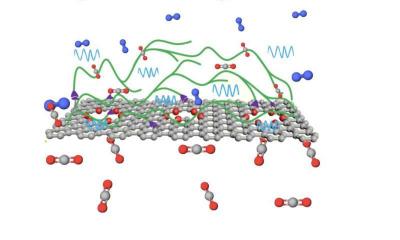
Now, scientists at Ecole Polytechnique Federale de Lausanne (EPFL) have developed a new class of high-performance membranes that exceed post-combustion capture targets by a significant margin. The membranes are based on single-layer graphene with a selective layer thinner than 20 nm, and have highly tunable chemistry, meaning that they can pave the way for next-generation high-performance membranes for several critical separations.


The supercapacitor market is set to take off, and graphene could play a center role
Analysts from IDTechEx estimate that the global supercapacitor market is around $1.5 billion in annual sales, following several years of decline. IDTechEx, however, believes the market bottomed out in 2018-2019 and is now set for a sustained period of strong growth.

To find out more about graphene-enhanced supercapacitors, read the rest of the article here!
Billabong to launch graphene-enhanced surfing apparel
Billabong, global maker of surf & snow technical clothing and gear, recently announced its plans to be the first surf brand to go to market with a suit that utilizes graphene. The surfing apparel will be called Furnace Graphene, and is scheduled to appear in Billabong's 2019 fullsuit line.
The Billabong Furnace Absolute is planned to sport graphene lining on the front and back panels, and be more flexible and easy to use. In addition, it will enjoy flex and thermal retention capabilities. The Company referred to this tech as "an innovative new design where graphene wrapped yarns trap and retain heat more efficiently".
Graphene and bacteria combine to create a powerful electrocatalyst
Researchers from KAUST have shown that microbes and nanomaterials like graphene can be used together to form a biohybrid material that performs well as an electrocatalyst. The team says that such materials could be used in the solar-powered production of carbon-free fuels and several other green-energy applications.
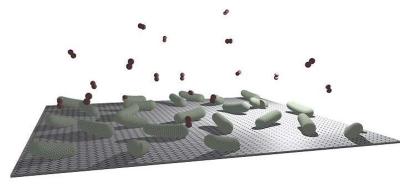
A process called the oxygen-evolution reaction (OER) is at the heart of many clean energy technologies. In the case of solar-fuel production, for example, the OER enables the use of solar electricity to split water molecules into oxygen and hydrogen, producing clean hydrogen that can be used as a fuel. Currently, rare and expensive metals are used as OER electrocatalysts. However, graphene-based biohybrid materials could make an inexpensive, eco-friendly alternative, as the team at KAUST has shown.
When the team mixed the bacterium and the graphene oxide under oxygen-free conditions, the bacterial cells adhere to the surface and produce iron-rich proteins to interact biochemically with the graphene oxide as part of their natural metabolism. As a result, the reduced graphene oxide ends up decorated with iron, copper and sulfur; thereby, becoming a highly efficient OER electrocatalyst. The team is now working on large-scale production and commercialization of this biohybrid catalyst and developing other types of biohybrid catalyst for other important electro-catalytic reactions, such as hydrogen-evolution reaction and carbon-dioxide reduction.
Unique device that combines graphene and boron nitride can switch from superconducting to insulating
Researchers at the U.S. Department of Energy's Lawrence Berkeley National Laboratory (Berkeley Lab) have designed a graphene device that switches from a superconducting material to an insulator and back again to a superconductor — all with a flip of a switch. The team shared that the device exhibits this unique versatility while being thinner than a human hair.
The graphene device is composed of three 2D layers of graphene. When sandwiched between 2D layers of boron nitride, it forms a repeating pattern called a moiré superlattice. The material could help other scientists understand the complicated mechanics behind a phenomenon known as high-temperature superconductivity, where a material can conduct electricity without resistance at temperatures higher than expected, though still hundreds of degrees below freezing.
Graphene-Info's Batteries, Supercapacitors, Graphene Oxide, Lighting, Displays and Graphene Investments Market Reports updated to July 2019
Graphene-Info has published new versions of all its graphene market reports. Graphene-Info provides comprehensive niche graphene market reports, that are now updated to July 2019.
Researchers from the Moscow Institute of Physics and Technology (MIPT) and Valiev Institute of Physics and Technology in Russia have demonstrated resonant absorption of terahertz radiation in commercially available graphene.
Highways England, a government responsible for motorways and major A roads, has partnered with the Graphene Engineering Innovation Center (GEIC), in order to use graphene to address challenges experienced by the road network in England, such as the deterioration of surfaces.
GrapheneCA, graphene producer and developer of graphene-based technology for industries and consumers, has announced that it has signed a memorandum of understanding with Apis Cor to develop a 3D printing system capable of printing graphene materials.
AIXTRON recently showcased two of its systems, which enable cost effective graphene production for a myriad of applications such as consumer electronics, sensors and photonic applications.
UK-based graphene technology company Paragraf has announced the close of its £12.8 million (over $16 million USD ) Series A round led by Parkwalk.
Stanford physicists recently observed a novel form of magnetism, predicted but never seen before, that is generated when two graphene sheets are carefully stacked and rotated to a special angle.
Versarien recently shared it has signed a letter of intent with its textile collaboration partner to launch sportswear containing Versarien's graphene ink technology.
Haydale has announced that its graphene-enhanced prepreg has been incorporated in the composite tooling and automotive body panels in the new BAC Mono R, which made its debut at Goodwood Festival of Speed.
Researchers from the University of Geneva (UNIGE) in Switzerland and the University of Manchester in the UK have found an efficient way to control infrared and terahertz waves using graphene.
Researchers at the U.S-based University of Rochester, along with colleagues at Delft University of Technology in the Netherlands, have designed a way to produce graphene materials using a novel technique: mixing oxidized graphite with bacteria.
Project "HEA2D", which started in 2016 and set out to investigate the production, qualities, and applications of 2D nanomaterials, recently demonstrated end-to-end processing chain of two-dimensional nanomaterials.
Do you have a friend or a colleague that might be interested in Graphene technology? Forward this mail to update him on the world of Graphene.
If you received this email from a friend, subscribe to this newsletter here!


