The Graphene-Info newsletter, May 2017
Published: Wed, 05/03/17


Applied Graphene Materials and Airbus to develop graphene-enhanced satellite materials
Applied Graphene Materials recently updated on the successful completion of the exploratory phase of its development program with Airbus Defense and Space. The program aims at using graphene for satellite applications.
Now, AGM states that based on the success of the initial work, both parties are collaborating on a final product development phase, with a desired target to qualify the material for flight use and first application by the end of 2017 or early 2018.


JTX demonstrates its graphene filament LED lighting
JTX (officially Shandong Prosperous Star Optoelectronics Co.) demonstrated its graphene-enhanced LED lighting bulbs at the Hong Kong lighting fair. These LED lighting devices use graphene coatings that aid in heat dissipation and thus contribute to longer lifetime and better efficiency.
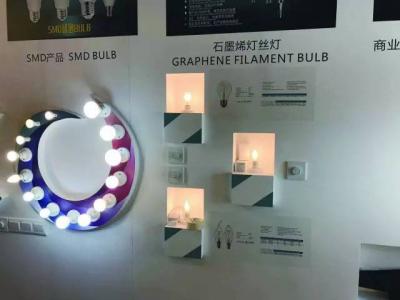
JTX is a relatively new company (established in May 2014 in China) that is involved with the entire LED lighting value chain (from LED chips and filaments to complete light bulbs). In July 2016 JTX was merged with Graphene Lighting PLC that developed the graphene lighting technology in collaboration with Manchester University and the NGI.
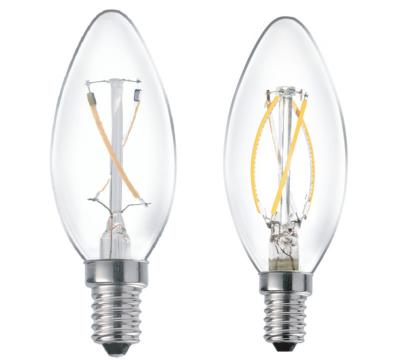
JTX currently offers two series of graphene LED bulbs, the A60 filament series and the C35 curved filament series you see above. It is not clear what are the advantages that graphene offers in these products exactly.
Graphene may assist in producing cells vital for nerve regeneration
Researchers at Iowa State University (ISU) are developing a graphene-based method to transform stem cells into Schwann-like cells (cells of great importance for various nerve regeneration efforts). If successful, this process has potential to replace the complicated and expensive process used today.
The researchers state that the results could change how nerve injuries are treated inside the body: “these results help pave the way for in vivo peripheral nerve regeneration where the flexible graphene electrodes could conform to the injury site and provide intimate electrical stimulation for nerve cell regrowth” the researchers wrote in a summary of their findings.
Graphene on the move - advancements of graphene use in transportation applications
China's Hybrid Kinetic Group, a producer of lithium-ion batteries and hybrid vehicles, announced its aim to build car assemblies in three to five locations across China, with an initial production capacity of 300,000 units within three years, eventually expanding the capacity to 1 million units. While not many details were given, it was said that some of the models are to be powered by a 30 kilowatt battery using graphene with a 60 kw micro turbine power generator that theoretically can extend the battery’s range to 1,000 kilometers on each charge.

Also this month, researchers at The University of Alabama used graphene to fabricate a lighter car hood, as part of an attempt to reduce the weight of a Chevrolet Camaro. The new hood is made of a mixture of graphene and carbon fiber, as opposed to the original hood which is made of aluminum.

In addition, the Ministry of Transport, national operator KTMB in Malaysia and China's CRRC Zhuzhou Locomotive have signed a €180 million contract for the supply of 22 electric multiple-units of two types. The order includes 13 EMUs with a capacity of more than 500 passengers, with a maximum speed of 100 km/h. These are said to be equipped with CRRC's graphene-based supercapacitors. CRRC said the 60 kF capacity energy storage would enable 85% of the braking energy to be recovered for use when accelerating.
Graphene updates from Prof. James Tour's graphene lab at Rice University
Prof. James Tour's research lab in Rice University is one of the leading graphene research groups in the world, with several key technologies first discovered and developed there. Professor Tour is involved with several application areas - from de-icing coating to energy storage and quantum dots production. Prof. Tour was kind enough to share his time and update us on the latest research and commercialization efforts at his lab.
The Tour group is now commercializing two of its key technologies. First up is the laser-induced graphene (or LiG), which was first reported in 2014. One of the interesting application areas (developed in collaboration with the Ben Gurion University in Israel) is water filtration - separating oil and water. The idea is that two 20-micron layers of graphene coatings are fabricated on the polyimide - one on each side. One side is made hydrophobic and one hydrophilic. Both the graphene and the polyimide are made porous which results in the separation of oil and water. This is an efficient method to perform the separation and the graphene-enhanced membrane is relatively easy to manufacture.
Other applications for LiG include supercapacitors and many others that can take advantage of these relatively easy-to produce flexible graphene films. Read the full post here.
Korea-based ETRI develops OLED display with graphene transparent electrodes
Researchers from the Korea-based ETRI (Electronics and Telecommunications Research Institute) have used graphene transparent electrodes to create an OLED display, 370mm x 470mm in size.
The ETRI team designed a process that can pattern a graphene-made transparent electrode in accurate size on a glass substrate. The researchers replaced indium tin oxide used for current commercial applications, that is a rare metal known for being brittle. The team said a flexible substrate combined with graphene will allow for flexible displays that are thin enough to be used for wearable devices and clothes. They will attempt to use a plastic substrate instead of glass so that the process can be applied to wearable OLEDs.
Graphene Week – 25-29 September, Athens, Greece
Organised by the Graphene Flagship, Graphene Week is the annual gathering for graphene technology leaders. This year’s edition will be held in Athens, Greece, 25-29 September, at the Divani Caravel Hotel facing the Acropolis. The programme includes over 30 scientific talks by invited world leading experts on topics related to graphene and related materials (GRM) ranging from fundamental science to applications within nanocomposites, electronics, energy, biomedicine and much more. Graphene Week also includes over 100 oral presentations and more than 400 posters.
The popular Innovation Forum fringe sessions focus on all aspects of graphene innovation, such as standardisation, the GRM road map and commercialisation. Additionally, there are sessions highlighting women in graphene, the mechanisms of the Graphene Flagship and ethic aspects of science.
Graphene-Info launches the Graphene Catalog - your source for graphene materials!
We're proud to launch a new service - the Graphene Catalog, a revolutionary new graphene materials directory. This first-of-its-kind catalog lists graphene materials available on the market, divided into categories - graphene flakes (including reduced GO), graphene oxide, graphene sheets and 3D printing filaments.
So if you're looking for graphene materials, all you have to do is click here and get started. We can also help with finding a graphene developer to produce custom graphene materials. Contact us for more information.
Researchers at the Germany-based Leibniz Institute of Polymer Research have developed a structurally colored coating based on graphene flakes, that changes color depending on deformation of the colored surface.
Researchers at the University of Melbourne succeeded in imaging how electrons move in 2D graphene, an achievement which may boost the development of next-generation electronics.
Researchers from the Clemson Nanomaterials Institute and the Ural Federal University in Russia have discovered a way to make an extremely thin oxygen selective membrane using graphene.
Researchers from Nec Corporation have developed a graphene-based porous material, dubbed "Magic G", that can reportedly be used in both the anode and the cathode of a lithium-ion battery, as an additive, to increase its performance.
Haydale Graphene Industries is setting up its first Asian Graphene Research Center in Thailand Science Park in Pathum Thani, focusing on conducting translational research to serve industries in the region.
Researchers at MIT have developed a technique that uses graphene as a kind of “copy machine”, to transfer intricate crystalline patterns from an underlying semiconductor wafer to a top layer of identical material.
Researchers at Purdue University, the University of Michigan and Pennsylvania State University have combined graphene with a (comparatively much larger) silicon carbide substrate, creating graphene field-effect transistors which can be activated by light.
Researchers from the Singapore University of Technology and Design (SUTD) have proposed a high-efficiency energy harvesting device based on graphene electrodes and 2D transition metal dichalcogenide materials.
Researchers at the Australian RMIT have developed an electrode prototype, inspired by fern plants, that could be a major boost to the capacity of solar power.
Scientists at The University of Manchester have made a breakthrough in the field of graphene oxide membranes for water desalination.
Do you have a friend or a colleague that might be interested in Graphene technology? Forward this mail to update him on the world of Graphene.
If you received this email from a friend, subscribe to this newsletter here!


