MicroLED-Info weekly newsletter
Published: Tue, 06/08/21


Integrated Image Capture: Potentially Key Advantage for MicroLED Displays
This is a guest article by IdeaFarm LLC
A potentially key advantage for microLED displays is the ability to effectively integrate far-field image sensing within the display because of the large “open” pixel area compared to other display technologies. The basic feasibility and advantages of integrating far-field image capture within a microLED display was reported on by IdeaFarm LLC at the recent Displayweek 2021 conference (the major worldwide display technology conference). IdeaFarm proposes to integrate an array of miniature wafer-based camera chips, “microcameras”, on the same substrate as microLEDs as part of the display manufacturing process (see diagram below for an illustration of the concept). Advanced real-time image processing is used to form high-resolution video by combining lower resolution video streams from multiple microcameras.

Because of the recent increased attention to improving the videoconferencing experience and the ongoing drive to eliminate bezels and display cut-outs in mobile phones and other devices, interest in including image capture inside displays is growing rapidly. The number of technical papers presented at Displayweek related to including image capture inside the display grew from essentially zero in 2019 to eleven in 2021. So far, under-screen or under-display cameras have been demonstrated in mobile phones with OLED displays, but only one brand is actually shipping and the tradeoffs in image quality and visibility of the camera zone have been noted.
We talk lasers in the microLED industry with Bolite Optoelectronics' CEO
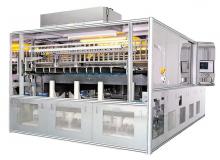
The founder and General Manager of Bolite Optoelectronics, Dr. Bowen Cheng, was invited to present at the recent Touch Taiwan 2021 Conference in April. The title of his talk was “Laser Processing Applications for the Manufacturing of Mini and MicroLED Displays.” Since it was presented in Mandarin only, microled-info.com caught up with Dr. Cheng to learn more about this trending subject and the company he started.
Q: Dr. Cheng, can you please tell us a little about your background, prior to starting Bolite?
I was a research engineer at Xerox PARC and helped develop surface micromachined microspring interconnects in a project funded by the U.S. Army Research in collaboration with Oracle. I was also a vital member of the team that successfully demonstrated the world’s shortest wavelength diode laser at the time, a 250 nm UV laser for military applications. With these experiences in both semiconductor laser processing and MEMS processing, I decided to start Bolite and build a team to develop state-of-the-art laser solutions for microprocessing applications.
Q: I must admit I’ve not heard of Bolite before. What differentiates you from other laser microprocessing companies?