GE announced that it has been able to deposit its red phosphor (PFS-KSF) material using an inkjet printing process on a plastic substrate. This technology can be applied in future microLED and miniLED displays.
GE is also sampling a new green phosphor, that together with the red phosphor can attain 88% Rec. 2020. The company reveals that almost 40 billion LEDs with its PFS-KSF material were sold into commercial displays.
In July 2019 Taiwan-based microLED developer PlayNitride raised $50 million to start trial production of microLED displays. According to a new report from Taiwan, the company plans to raise an additional $50 million by the end of September 2020 to funds it second microLED production line.
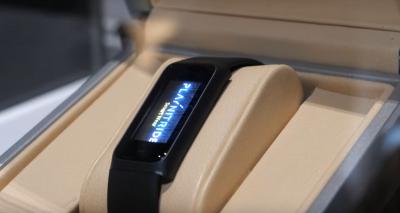
PlayNitride started volume production at its first production line in 2019, for small wearable displays, and the first displays are now being "validated" by customers. Shipments are likely to begin next year.
PlayNitride introduced several new display technologies at SID DisplayWeek 2020. First up we have the PixeLED Matrix, which is a tiled microLED display module based display, each produced on its own PCB.
Each PixeLED module is made from 16 pixels (4X4), and can reach pitches of 0.3-0.4 mm. PlayNitride says that this technology can compete with mini LED displays, and says that it achieves a superior contrast and can also be fitted on curved surfaces. PixeLED displays can be used for TV displays, for commercial signage displays and also for automotive lighting. The display can currently achieve a maximum brightness of 2,000 nits.
Digitimes reports that Touch screen IC designer Elan Microelectronics has formed a strategic alliance with LED driver IC developer Macroblock, to develop solutions for micro-LED and mini-LED displays.
As part of the alliance, Elan acquired a 7.87% stake in Macroblock. Elan's president says that the new alliance will focus on driver and touch controller ICs for microLED displays in wearable products, and miniLED drivers and TDDI ICs.
In December 2019 Taiwan-based PMOLED display maker RiTDisplay announced that it plans to launch its first MicroLED displays in 2020. Last week during SID Displayweek 2020 the company demonstrated its first prototype, as can be seen in the video below.
The company did not reveal any technical specifications or discuss any commercialization plans.
AU Optronics released this nice video that shows its latest microLED display prototypes. First up is the company's 12.1" automotive display. This one features a 1920x720 (169 PPI) resolution, and is made on an LTPS backplane. This display was shown first in 2018.
Digitimes reports that Epistar's chairman, Lee Biing-jye says that he estimates that the first volume application for microLED displays is going to be in the smartwatch industry - but that will still take 3-4 years to actually materialize. Volume adoption in the TV market will take at least 4-5 years.
Epistar is developing microLED epitaxy and chip technology (in collaboration with AUO
) and still has challenges to overcome, mainly in the mass transfer area. The company expects to achieve reliable production capabilities within 2-3 years. Epistar needs also to improve the yield rates for microLED epitaxy and reduce costs for mass transfer processes.