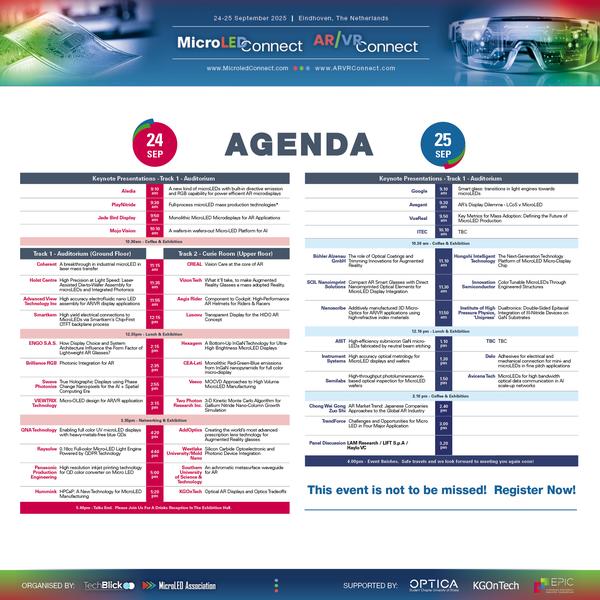
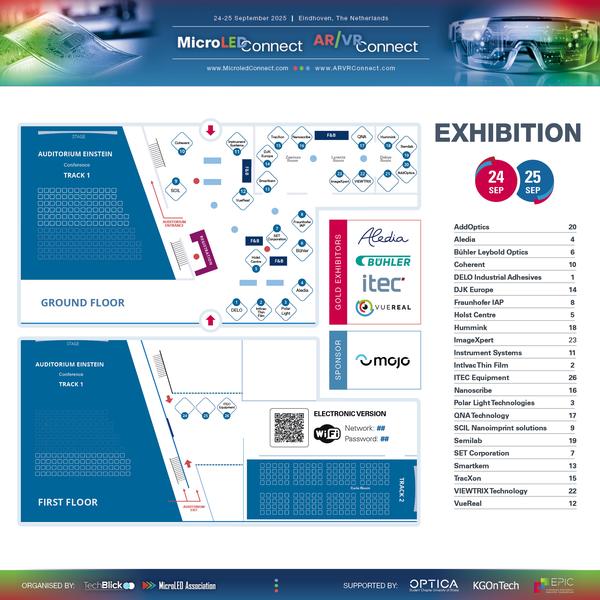
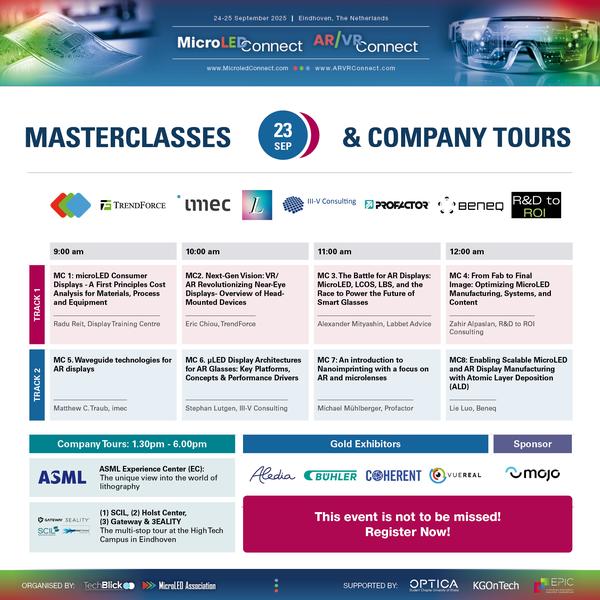
We are Exhibiting! Visit our booth at the MicroLED Connect & AR/VR Connect in Eindhoven on 24-25 September 2025
The Real Bottleneck: Access, Not Imagination
Unlike OLED panels - which are widely
available for prototyping and development - microLEDs have historically been locked behind technical and supply chain hurdles. Most companies simply can’t get their hands on the technology. Traditional microLED manufacturing typically requires highly specialized equipment, high-volume commitments, and extensive engineering integration, putting it out of reach for the majority of companies.
Even those who want to explore microLEDs in earnest are left to imagine what is possible rather than
test, iterate, and build. This creates a fundamental mismatch between the potential of microLED and the ability of teams to work with it.
A Shift Toward Flexible Manufacturing
That dynamic is now beginning to change. Advances in high-precision transfer technologies - such as MicroSolid Printing - have introduced a new manufacturing model, one that supports high, medium, and low volume production without the need for dedicated fabrication facilities. With these
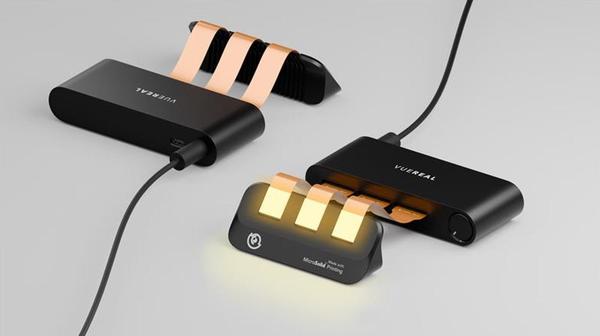
processes, microLED modules can be produced flexibly, whether for single prototypes, pilot runs, or limited product lines. The result is lower capital expenditure, faster iteration, and greater accessibility for engineering and product teams of all sizes. Crucially, this unlocks the ability to offer microLED technology as a modular, off-the-shelf component: the Reference Design Kit.
Reference Design Kits: The Bridge Between Promise and Product
RDKs mark a major
shift in how companies interact with microLED technology. Rather than needing to co-develop complex custom solutions from scratch, product teams can now acquire pre-built modules - complete with drive electronics, integration documentation, and support - to start experimenting immediately.
These kits serve two essential purposes:
- Proof of Feasibility: RDKs demonstrate that microLED mass transfer and integration are not just theoretical - they’re
commercially viable today.
- Platform for Innovation: RDKs empower teams to explore use cases, iterate quickly, and build proofs of concept in-house without large development contracts or IP entanglements.